
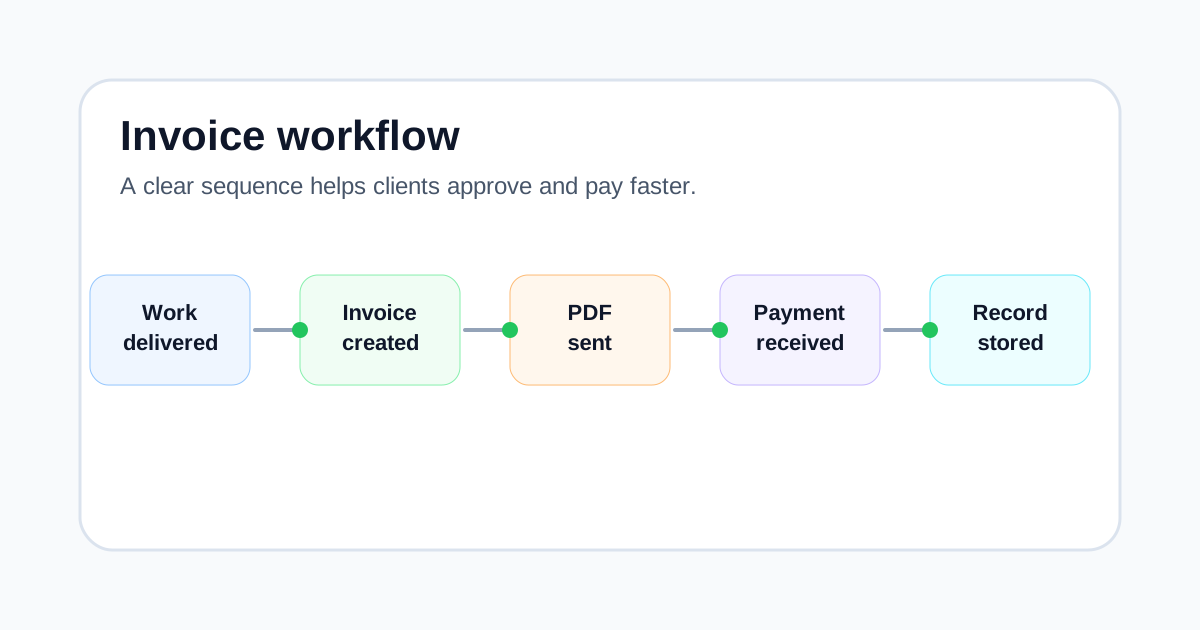
If you run a small business, freelance, consult, repair things, design things, write things, or sell services, you will eventually need to send an invoice. The word sounds formal, but the idea is simple: an invoice is a document that tells a client what they owe, why they owe it, when payment is due, and how to pay.
An invoice is not just a request for money. It is also a business record. It helps your client understand the charge, helps you track income, and gives both sides a clear paper trail if there is a question later. A good invoice makes payment easier. A vague invoice creates follow-up emails, delays, and sometimes disputes.
This guide explains invoices in plain language, with examples and practical checklists you can use before sending your first document.
Key takeaways
- An invoice is sent after goods or services are delivered, or when a milestone payment is due.
- It should include seller details, client details, invoice number, dates, line items, totals, and payment instructions.
- A quotation usually comes before work starts; an invoice usually comes when payment is requested.
- A receipt confirms payment after money has been received.
- The clearer your invoice is, the easier it is for clients to approve and pay.
What an invoice does
An invoice answers five basic questions:
| Question | What the invoice should show |
|---|---|
| Who is requesting payment? | Your business name, address, and contact details |
| Who needs to pay? | The client or customer billing details |
| What was provided? | Products, services, dates, quantities, and descriptions |
| How much is due? | Subtotal, taxes, discounts, and total |
| How should payment happen? | Due date, payment method, and payment reference |
When all five questions are answered clearly, the invoice is easier to process. If one is missing, the client may need to ask for clarification before paying.
Invoice vs quotation vs receipt
These documents are related, but they are not the same.
| Document | When it is used | Main purpose |
|---|---|---|
| Quotation | Before work starts | Shows proposed pricing and scope |
| Invoice | After delivery or at a payment milestone | Requests payment |
| Receipt | After payment is received | Confirms payment |
Example: a web designer sends a quotation for a landing page. The client approves it. After the work is completed, the designer sends an invoice. Once the client pays, the designer can issue a receipt or payment confirmation.
If you want a deeper comparison, read the guide to invoice vs receipt vs quotation.
What should be on an invoice?
Most invoices should include these fields:
- Your business name and contact details
- Client name and billing details
- Invoice number
- Invoice date
- Due date or payment terms
- Description of goods or services
- Quantity, unit price, and line total
- Subtotal
- Tax, if applicable
- Discount, if applicable
- Total due
- Payment instructions
- Notes or terms, if needed
The exact requirements can vary by country, tax status, and business type. Quick Invoice Tool helps format the document, but it does not replace tax or legal advice. If rules affect your business, check official sources or a qualified local advisor.
A simple invoice example
Here is a basic invoice layout for a small service business:
| Field | Example |
|---|---|
| Invoice number | INV-2026-0041 |
| Invoice date | May 12, 2026 |
| Due date | May 26, 2026 |
| Bill to | Northbridge Cafe |
| Description | Menu photography session |
| Quantity | 1 project |
| Amount | 650.00 |
| Payment terms | Net 14 |
| Payment reference | INV-2026-0041 |
This example is simple, but it works because it gives the client enough information to match the charge to the work.
Common invoice mistakes
Small invoice mistakes can delay payment even when the client wants to pay you.
Missing invoice number
Invoice numbers help both sides track the document. Do not reuse numbers. Keep your sequence consistent, such as INV-2026-0001, INV-2026-0002, and so on.
For a full system, read the invoice numbering guide.
Vague line items
"Services" is too vague. "Logo design - final files and usage guide" is better. A client should be able to understand what they are paying for without asking you to explain it again.
No payment instructions
If you want payment by bank transfer, include the payee name, bank details, and payment reference. If you accept another method, explain it clearly.
No due date
"Net 14" is useful, but a specific due date is clearer. For example: "Net 14 - due May 26, 2026."
Incorrect client details
Some companies have multiple legal entities. If you invoice the wrong one, payment may be delayed while the document is corrected.
Practical checklist before sending
Before sending an invoice, review:
- Is the client name correct?
- Is the invoice number unique?
- Is the invoice date correct?
- Is the due date clear?
- Are line items specific?
- Do totals add up?
- Are taxes or discounts shown clearly?
- Are payment instructions complete?
- Did you save a copy for your records?
You can use the free invoice generator or open the builder to create a clean PDF invoice with these fields.
FAQ
Is an invoice legally binding?
An invoice is usually a payment request and business record. Whether it creates legal obligations depends on your contract, local rules, and the transaction. Use clear written agreements before work starts.
Can I send an invoice without a company?
Many freelancers and sole proprietors invoice under their own name. Requirements vary by country, so check local rules if you are unsure.
Is a PDF invoice acceptable?
PDF is commonly used because it preserves formatting and is easy to email. Some regions or clients may require structured e-invoices or portal submission, especially for tax compliance.
Can I use the same invoice number twice?
No. Reusing invoice numbers creates bookkeeping confusion and can look careless. Each invoice should have a unique number.
What is the fastest way to create an invoice?
Use a structured tool such as the invoice generator, check the preview, then download the PDF. If you need a different layout, browse invoice templates.
Final thought
An invoice does not need to be complicated. It needs to be complete, clear, and easy to pay. If you include the right details, write specific line items, and keep a consistent numbering system, your invoices will feel more professional and create fewer payment delays.