
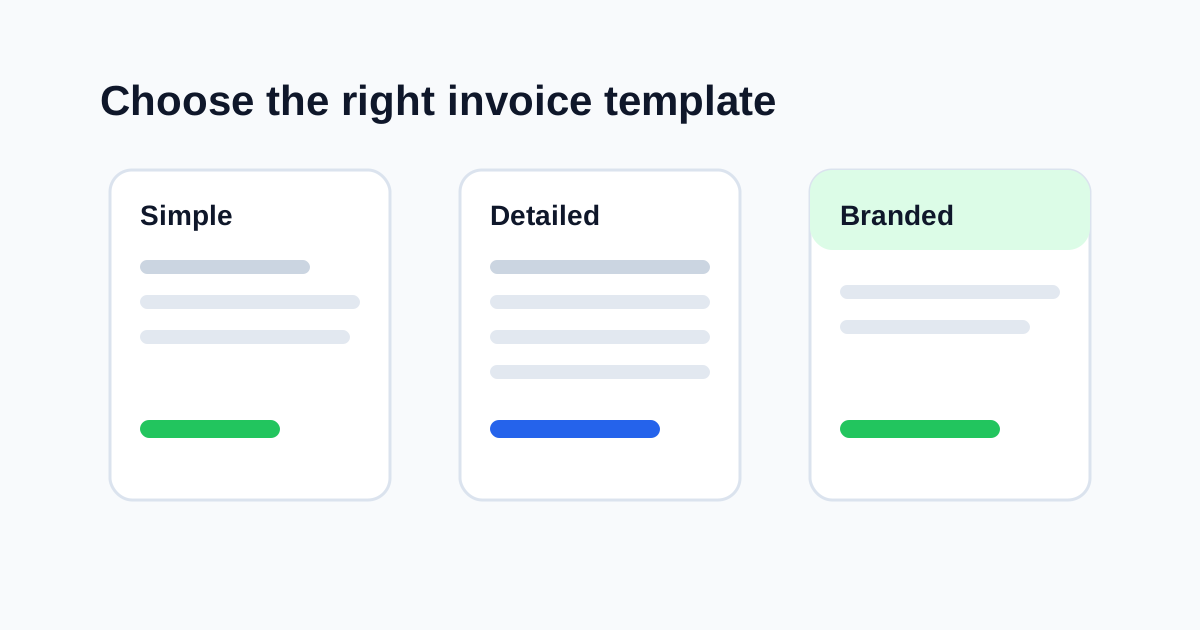
A branded invoice isn’t about being flashy.
Most clients don’t care whether your invoice has a gradient background or a clever tagline. They care whether the invoice is clear, credible, and easy to approve.
Branding matters because it signals professionalism. A consistent invoice layout can reduce questions, prevent disputes, and make your business feel “real”—especially if you’re a freelancer or a small team.
This guide shows you how to create branded invoices clients trust: what to include, what to avoid, and how to keep it consistent without spending hours on design.
What “branded invoice” really means
A branded invoice is simply an invoice that:
- uses consistent business identity (name, logo, colors)
- feels deliberate and tidy
- matches your other documents (like quotations)
- is easy to scan and process
Branding should support clarity, not compete with it.
The non-negotiables (branding can’t replace basics)
Before you think about design, make sure your invoice has the essentials:
- your business name and contact details
- client legal name and billing address
- invoice number, invoice date, due date
- clear line items, subtotal, tax (if applicable), total due
- payment instructions
If these aren’t clear, branding won’t help. In fact, heavy branding can make invoices harder to read.
What to brand (and what not to)
Brand these elements
1) Logo (small and consistent)
Place your logo at the top, but don’t let it dominate. A small logo in the header is enough.
2) Business name and contact details
Your business name should be obvious. If you operate under a trading name, make sure it matches what clients recognize.
3) Color accents (not backgrounds)
Use one brand color for accents:
- table headers
- section titles
- subtle lines
Avoid large colored backgrounds; they make printing difficult.
4) Typography (clean and readable)
Use readable fonts. Clients will print invoices or view them in poor PDF viewers. Keep it simple.
Avoid branding these elements
1) Over-designed layouts
If a client can’t find the total or due date quickly, you’ve created a payment delay.
2) Tiny text
Designers sometimes shrink text to “fit everything.” Don’t. White space is a feature.
3) Unclear labels
Don’t rename “Total due” to something creative. Finance teams want predictable labels.
The best invoice layout for trust
A trustworthy invoice layout is predictable.
Here’s a structure that works:
- Header: logo + business name + contact
- Summary block: invoice number, date, due date, total
- Bill To: client details
- Line item table
- Totals block
- Payment instructions
- Notes (optional)
Make the “payment decision” elements obvious
Clients decide whether to pay based on:
- what is this for?
- how much is it?
- when is it due?
- how do we pay?
Your layout should answer these quickly.
Branded invoices and consistency across documents
If you quote before you invoice (recommended), your quotation and invoice should look related.
Why?
- clients recognize your documents
- the invoice line items can mirror the quotation
- disputes reduce because “this matches what we approved”
That’s why many small businesses use a quotation generator to standardize quotes and an invoice generator to standardize invoices. The brand consistency helps trust.
Real scenarios (where branding helps)
Scenario 1: Freelancer working with a corporate client
Corporate finance teams process many invoices. A clean branded invoice:
- looks legitimate
- is easy to file
- is less likely to be questioned
Branding won’t replace required references (PO numbers), but it reduces doubt.
Scenario 2: Small agency with multiple team members
If different people send invoices, branding ensures consistency. Clients shouldn’t receive three different invoice styles in three months.
Scenario 3: Client disputes a line item
A well-structured invoice that mirrors the quotation makes disputes easier to resolve. The client can see exactly what was agreed.
Practical branding checklist
- ✅ Logo included (small)
- ✅ Business name matches your website/email
- ✅ One brand color used for accents
- ✅ Clean table for line items
- ✅ Total due and due date visible
- ✅ PDF is print-friendly
- ✅ Same style used on quotes and invoices
Tools: the easiest way to keep branding consistent
You can brand invoices in a design tool, but many people end up with messy workflows:
- you edit the design each time
- totals get typed manually
- mistakes slip in
A simple invoice generator helps because it keeps structure consistent while letting you add your logo and details. A quotation generator helps you do the same for quotes, so the client experience feels coherent.
The goal is to reduce admin time while staying professional.
Before-and-after branding audit
You can improve most invoice designs in under 15 minutes by checking the basics:
| Area | Weak version | Better version |
|---|---|---|
| Logo | Large logo pushing invoice details down | Small logo beside business name |
| Colors | Heavy color blocks that hurt printing | One accent color for headings or totals |
| Line items | Vague labels like "Work done" | Specific deliverables and dates |
| Payment details | Hidden in notes | Easy to find near the total or footer |
| File name | invoice-final-new.pdf | INV-2026-014-client-name.pdf |
Branding should make the invoice easier to trust, not harder to read. If design choices make the due date, total, or business details less visible, simplify the layout.
Useful next steps
- Browse invoice templates if you need a clean layout.
- Create a matching quotation so your quote and invoice feel consistent.
- Review common invoice mistakes before sending the final PDF.
FAQ
Do clients care about invoice branding?
Clients care about clarity first. Branding matters because it signals professionalism and consistency.
Should I include my logo on invoices?
Yes, if you have one. Keep it small and don’t let it crowd the invoice details.
Should invoices match my website design?
They should feel consistent (logo, colors, tone), but invoices don’t need heavy design. Keep them clean.
Can branding reduce late payments?
Indirectly. A clear, professional invoice is less likely to be questioned or rejected.
What’s the most important design element?
Readability. Make the total due and due date obvious.
Is it okay to send invoices as images?
Avoid it. PDF is the standard. Images are harder to process and print.
Conclusion
Branded invoices build trust when branding supports clarity: a clean layout, consistent identity, and predictable invoice details.
Keep branding subtle, make totals and due dates obvious, and align your invoices with your quotations so clients see the same professional structure every time.
If you want a simple way to create professional invoices, Quick Invoice Tool makes it easy to do that in minutes.