
If you've ever found yourself stuck between payroll deadlines and unpaid invoices, you're not alone. Cash flow problems caused by slow-paying clients are one of the most common challenges small businesses face. You've done the work, sent the invoice, and now you're waiting 30, 60, or even 90 days to get paid—while your own bills, suppliers, and employees can't wait.
This cash flow gap creates a painful dilemma: you need money to operate, but your revenue is locked up in outstanding invoices. You can't take on new projects because you can't afford materials. You can't hire the help you need because you can't make payroll. You're technically profitable on paper, but practically broke in your bank account.
This is the problem invoice factoring is designed to solve. Instead of waiting months for clients to pay, you can sell those unpaid invoices to a third party and get cash immediately—usually within 24 to 48 hours. It sounds like an attractive solution when cash is tight, but invoice factoring comes with significant costs and trade-offs that many business owners don't fully understand until they're locked into contracts.
So should your business use invoice factoring? The answer depends on your industry, your margins, your clients, and whether you've explored less expensive alternatives first. This guide explains exactly what invoice factoring is, how it works, what it costs, and when it makes sense (and when it doesn't) for small businesses.
What Is Invoice Factoring?
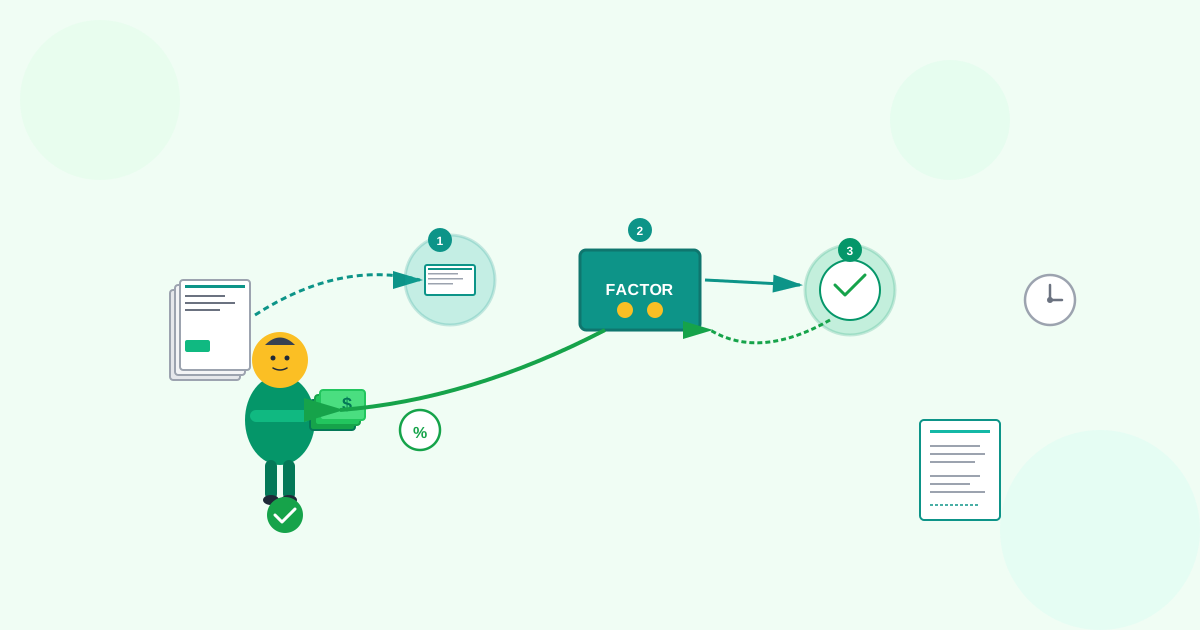
Invoice factoring is a financial arrangement where you sell your unpaid invoices to a third-party company (called a "factor") at a discount in exchange for immediate cash. The factor then collects payment directly from your clients when the invoices come due.
Here's the basic concept: instead of waiting 60 days for your client to pay a £10,000 invoice, you sell that invoice to a factoring company for, say, £9,500. You get £9,500 today, and the factoring company collects the full £10,000 from your client in 60 days, keeping the £500 difference as their fee.
It's important to understand that invoice factoring is not a loan. You're not borrowing money and paying it back. You're selling an asset (your invoice) for less than its face value. This distinction matters because it means factoring doesn't create debt on your balance sheet and doesn't usually require the same credit checks or collateral that bank loans do.
The factoring company isn't evaluating your creditworthiness—they're evaluating your clients' creditworthiness. If your clients have a good track record of paying invoices, you're likely to be approved for factoring even if your own business credit is limited or poor.
How Invoice Factoring Works: Step by Step
Understanding the factoring process helps you see exactly where the costs and control issues arise:
1. You Complete Work and Issue an Invoice
You deliver goods or services to your client and send them an invoice with standard payment terms—typically Net 30, Net 60, or Net 90. This is your normal invoicing process; nothing changes here.
2. You Submit the Invoice to the Factoring Company
Instead of waiting for your client to pay, you submit the invoice to your factoring company. The factor verifies that the work was completed, the invoice is legitimate, and your client is creditworthy.
3. You Receive an Immediate Advance (70–90%)
Within 24 to 48 hours, the factoring company advances you a percentage of the invoice value—typically 70% to 90%. So on a £10,000 invoice, you might receive £8,000 to £9,000 immediately.
4. The Factor Collects Payment from Your Client
Here's where things get more complicated: the factoring company takes over collection of the invoice. They contact your client directly to collect payment, often using their own billing systems and processes. Your client now pays the factor, not you.
5. You Receive the Remaining Balance (Minus Fees)
Once your client pays the factor, you receive the remaining balance of the invoice minus the factoring fees. On that £10,000 invoice where you received an £8,000 advance, you might get back another £1,500 to £1,700, depending on the fee structure.
The total cost typically ranges from 1% to 5% of the invoice value, depending on your industry, invoice volume, client creditworthiness, and how long it takes your clients to pay. Some factors charge weekly or monthly fees if invoices remain unpaid beyond certain time periods.
6. The Process Repeats for Every Invoice
Most factoring arrangements are ongoing relationships, not one-time transactions. You submit invoices regularly, receive advances, and the factor handles collections continuously.
Invoice Factoring vs Invoice Discounting: What's the Difference?
Many people use the terms "invoice factoring" and "invoice discounting" interchangeably, but they're actually different arrangements with different implications for your business:
Invoice Factoring
- Who collects payment: The factoring company contacts your clients and collects payment directly
- Client awareness: Your clients know you're using factoring because they're told to pay the factor
- Relationship control: You lose control over client communication during the collection process
- Typical advance rate: 70–90% of invoice value upfront
- Best for: Businesses that don't mind clients knowing about the arrangement
Invoice Discounting
- Who collects payment: You still collect payment from your clients yourself
- Client awareness: Your clients typically don't know you've borrowed against the invoices
- Relationship control: You maintain full control over client relationships and communication
- Typical advance rate: Often similar (70–90%), but you're responsible for collection
- Best for: Businesses that want to maintain confidential client relationships
Invoice discounting is generally more expensive than factoring because the financing company takes on more risk—they're trusting you to collect the money and forward it to them. Some businesses prefer paying extra for this confidentiality and control.
The Pros of Invoice Factoring
For businesses in the right situations, factoring offers genuine advantages:
Immediate Access to Cash
The most obvious benefit: you get money now instead of waiting weeks or months. For businesses with urgent cash needs—payroll, supplier payments, emergency expenses—this immediacy can be critical.
No New Debt on Your Balance Sheet
Because you're selling an asset rather than borrowing money, factoring doesn't create debt. This can be advantageous if you're trying to qualify for other financing or if you're already at your borrowing limit.
Approval Based on Client Credit, Not Yours
Factoring companies care about whether your clients will pay, not whether you have perfect credit. This makes factoring accessible to startups, businesses with poor credit history, or companies that have been turned down for traditional loans.
Outsourced Collections
If chasing down late payments isn't your strong suit (or you simply don't have time), having the factor handle collections can be a relief. You focus on your core business while they handle the paperwork and follow-ups.
Scalable Financing
As your business grows and you invoice more, your factoring capacity grows automatically. Unlike a fixed credit line, factoring availability is directly tied to your sales volume.
The Cons of Invoice Factoring
The costs and trade-offs of factoring are significant:
High Ongoing Costs
Factoring fees of 1% to 5% per invoice might not sound like much, but they add up quickly. A 3% fee on every invoice means you're giving up 3% of your revenue—every month, on every sale. That can easily total tens of thousands of pounds per year.
For comparison, a business credit card might charge 1.5% to 3% annual percentage rate (APR) if paid within a billing cycle. Factoring effectively charges that rate per invoice cycle, which could be monthly or even weekly.
Loss of Client Relationship Control
When the factor takes over collections, they're now communicating with your clients on your behalf. If they're aggressive, impersonal, or inefficient, it reflects on you. Some clients may be put off by dealing with a third party, especially if they've built a relationship with your business specifically.
Client Perception Issues
Some clients view factoring as a sign of financial distress. Rightly or wrongly, they may wonder: "If this business needs to factor their invoices, are they about to go under? Should we find a more stable supplier?"
Long-Term Contracts and Minimums
Many factoring companies require minimum monthly volumes or lock you into long-term contracts. If your business slows down or you find a better financing solution, you may still be obligated to submit a certain amount of invoices to the factor.
Hidden Fees and Complex Terms
Application fees, due diligence fees, monthly minimum fees, early termination fees, wire transfer fees—factoring contracts can be filled with additional costs beyond the basic factoring rate. Read contracts very carefully.
Not All Invoices Qualify
Factors typically won't accept invoices from individuals, government entities (in some cases), or clients with poor credit. If a significant portion of your invoices don't qualify, factoring becomes less useful.
Which Businesses Benefit Most from Invoice Factoring?
Factoring isn't right for every business, but it can be a good fit for specific industries and situations:
B2B Businesses with Long Payment Cycles
If you're invoicing other businesses (not consumers) with 60- or 90-day payment terms, and you have healthy profit margins that can absorb the factoring fees, you might benefit. Factoring is common in:
- Trucking and freight: Owner-operators and small trucking companies often use factoring to cover fuel, maintenance, and driver pay while waiting for clients to pay
- Staffing agencies: Temporary staffing companies pay employees weekly but invoice clients monthly, creating a cash flow gap that factoring can bridge
- Marketing and creative agencies: Agencies with long project cycles and slow-paying corporate clients sometimes use factoring to smooth cash flow
- Wholesale distributors: Distributors who need to pay suppliers quickly but give clients extended payment terms
- Manufacturing: Manufacturers with long production cycles and delayed payment
Businesses with Strong Margins
Factoring costs 1% to 5% of revenue. If your profit margins are only 5% to 10%, factoring could eat up half your profit or more. But if you're operating at 30% to 50% margins, the cost is more manageable.
Businesses with Creditworthy Clients
Factors want clients who pay on time. If most of your invoices are to established businesses with good payment histories, you're more likely to be approved and get better rates.
Businesses That Need Fast Access to Cash
If you have an immediate opportunity—a large order that requires upfront material purchases, or a new contract that requires hiring staff—and you can't wait for outstanding invoices to clear, factoring can provide bridge financing quickly.
When NOT to Use Invoice Factoring
Just because you can access factoring doesn't mean you should. Avoid factoring if:
Your Margins Are Thin
If you're operating at low profit margins (under 15%), factoring fees can push you into losses. The math simply doesn't work when you're giving up 2% to 5% of revenue on already tight margins.
You Have Low-Volume or One-Off Invoices
Factoring is designed for businesses with regular, recurring invoices. If you only send a few invoices per year, the setup costs and minimum fees often outweigh the benefits.
Your Clients Are Individuals or Poor Payers
Factors won't buy invoices from individuals or businesses with bad credit. If your client base doesn't meet factor requirements, you won't qualify.
You Can Access Cheaper Financing
If you qualify for a business line of credit at 8% to 12% APR, that's significantly cheaper than factoring. Always explore traditional financing first.
You Value Client Relationships Highly
If maintaining direct control over client communication is critical to your business model—especially in relationship-driven industries—factoring's third-party collections may damage those relationships.
You're Using Factoring to Cover Unprofitability
If you're factoring invoices because your business isn't profitable, you're masking a deeper problem. Factoring provides cash flow relief, not a path to profitability. Fix the underlying business model first.
Alternative Solutions to Consider First
Before committing to invoice factoring, explore these less expensive options:
Tighten Your Payment Terms
Move from Net 60 to Net 30, or from Net 30 to Net 14. Offer "Due on Receipt" terms for small invoices. Many businesses accept longer terms simply because that's what their invoices say—but clients will often pay faster if you ask.
Offer Early Payment Discounts
A 2% discount for payment within 10 days (often written as "2/10 Net 30") can motivate clients to pay faster. You're still giving up 2%, but only on invoices that get paid early, and you maintain full control of the relationship.
Require Deposits or Milestone Payments
For large projects, request 25% to 50% upfront, with additional payments at project milestones. This keeps cash flowing in throughout the project rather than all at the end.
Send Invoices Faster and Follow Up Promptly
Many businesses don't invoice immediately upon completion, which extends the payment cycle unnecessarily. Invoice the same day you complete work. Follow up at 7 days, 14 days, and immediately upon the due date. Faster invoicing and diligent follow-up can shave weeks off your collection cycle without any fees.
Use Professional Invoicing Tools
Clear, professional invoices get paid faster than handwritten or poorly formatted ones. Tools like QuickInvoiceTool let you create clean, branded PDF invoices in minutes, making it easy to invoice immediately and professionally. When invoices look legitimate and are easy to process, clients prioritize paying them.
Negotiate Better Terms with Suppliers
If cash flow is tight, see if your suppliers will extend payment terms. If you can pay suppliers in 45 days instead of 15, that buys you time for client payments to arrive.
Build a Cash Reserve
If possible, save 2 to 3 months of operating expenses in a business savings account. This buffer eliminates the need for emergency financing when invoices are late.
Apply for a Business Line of Credit
A traditional line of credit from a bank or credit union typically costs 8% to 15% APR—significantly less than factoring's effective rate. You only pay interest on what you borrow, and you maintain full control of client relationships.
Get Paid Faster with Professional Invoicing
One of the most effective ways to reduce cash flow pressure is simply to send clear, professional invoices promptly and follow up consistently. Vague invoices, delayed invoicing, and poor follow-up are major reasons businesses wait so long to get paid.
QuickInvoiceTool helps you create clean, professional PDF invoices in minutes:
- Create invoices immediately after completing work—no delay means faster payment
- Professional branded templates that clients take seriously and prioritize
- Clear payment terms and due dates leave no ambiguity
- Itemized breakdowns reduce disputes and payment delays
- Free to use with instant PDF downloads
Getting into the habit of invoicing promptly and professionally can reduce your average collection time by days or even weeks—providing cash flow relief without factoring fees.
Create Your Free Invoice Now →
Final Thoughts: Is Invoice Factoring Right for Your Business?
Invoice factoring can be a useful tool for businesses with genuine cash flow gaps, strong margins, and creditworthy clients—especially in industries where factoring is common and clients expect it. It provides fast access to cash without creating debt, which can be valuable in specific situations.
But factoring is expensive, reduces your control over client relationships, and should never be used as a substitute for building a profitable, sustainable business model. For most small businesses, improving invoicing practices, tightening payment terms, and pursuing cheaper financing options will provide better long-term results.
If you do decide factoring is right for your situation, read contracts carefully, understand all fees, and maintain enough margin to absorb the costs without jeopardizing profitability. And always—always—explore the alternatives first. The best solution to slow-paying invoices is often sending better invoices faster, not selling them at a discount.